
 Hyundai Azera: Telematics Unit (TMU) Repair procedures
Fifth generation HG (2011–2026) / Hyundai Azera 2011-2026 Service Manual / Body Electrical System / MTS System / Telematics Unit (TMU) Repair procedures
Hyundai Azera: Telematics Unit (TMU) Repair procedures
Fifth generation HG (2011–2026) / Hyundai Azera 2011-2026 Service Manual / Body Electrical System / MTS System / Telematics Unit (TMU) Repair procedures
Fifth generation HG (2011–2026) / Hyundai Azera 2011-2026 Service Manual / Body Electrical System / MTS System / Telematics Unit (TMU) Repair procedures
| Removal |
AVN Head Unit
|

| 1. |
Disconnect the negative (-) battery terminal. |
| 2. |
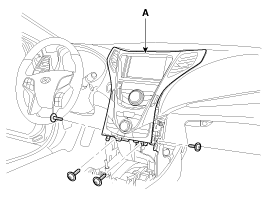
Remove the crash pad center fascia panel (A).
|
| 3. |
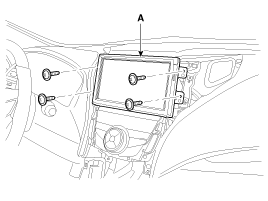
Remove the monitor (A) after loosening the mounting screws.
|
| 4. |
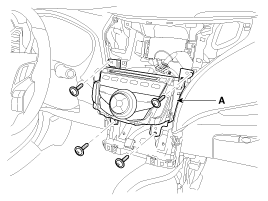
Remove the AVN head unit (A) after loosening the mounting screws.
|
| 5. |
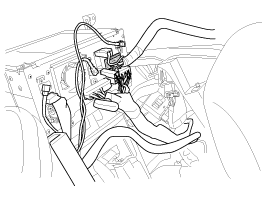
Remove the AVN head unit connectors and cables.
|
| 6. |
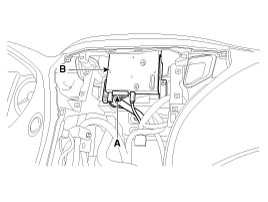
Disconnect the connectors (A) and loosen the screws (4EA), then remove the Telematics unit (B).
|
| Installation |
| 1. |
Install the Telematics unit. |
| 2. |
Install the the AVN head unit and the monitor unit. |
| 3. |
Install the the crash pad center fascia panel. |
| 4. |
Connect the negative (-) battery terminal. |
| Inspection |
| 1. |
After replacing the AVN, connect to "call center" by pushing the Blue Link button. |
| 2. |
If Blue Link service connected successfully, and then technician can hear the "Welcome to Hyundai Bluelink" sound.
|
 Telematics Unit (TMU) Components and Components Location
Component
...
 Microphone Repair procedures
Inspection
1.
Disconnect the negative(-) battery terminal.
2.
Remove the roof trim.
(Refer to Body - "Roof Trim Assembly")
3.
Remove the handsfree mic (A) after disconnect the connector f ...
See also:
Components and Components Location
Components
1. Main crash pad assembly2. Side speaker grille [LH]3. Center speaker grille4. Side speaker grille [RH]5. Alarm speaker assembly6. Center speaker assembly7. Photo sensor 8. Crash pad ...
Specifications
Specification
Air Conditioner
ItemSpecificationCompressorType6VSX16Oil type & CapacityFD46XG(PAG OIL) 100±10ccPulley type6PK-TYPEDisplacement160cc/revCondenserHeat rejection14,400 ±5% kcal ...
Interior overview
1. Seat
2. Door lock/unlock button
3. Central door lock switch
4. Power window switches
5. Power window lock button
6. Outside rearview mirror control switch
7. Outside rearview mirror fold ...
Categories
Hyundai Azera Manuals

© 2011-2026 Copyright www.hgmanual.com