
 Hyundai Azera: Inhibitor Switch Repair procedures
Fifth generation HG (2011–2026) / Hyundai Azera 2011-2026 Service Manual / Automatic Transaxle System / Automatic Transaxle Control System / Inhibitor Switch Repair procedures
Hyundai Azera: Inhibitor Switch Repair procedures
Fifth generation HG (2011–2026) / Hyundai Azera 2011-2026 Service Manual / Automatic Transaxle System / Automatic Transaxle Control System / Inhibitor Switch Repair procedures
Fifth generation HG (2011–2026) / Hyundai Azera 2011-2026 Service Manual / Automatic Transaxle System / Automatic Transaxle Control System / Inhibitor Switch Repair procedures
| Inspection |
|

Inspection flow
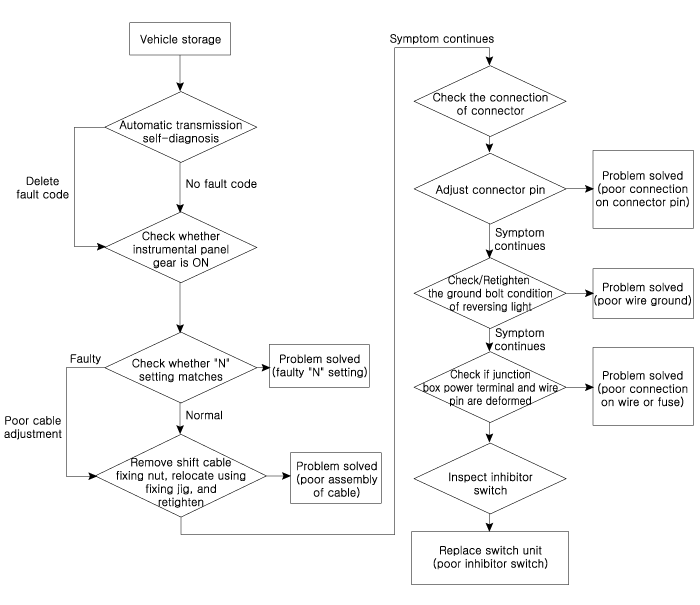
Items to check
| 1. |
Inspect DTC code. |
| 2. |
Inspect whether N setting matches.
|
| 3. |
Inspect shift cable separation.
|
| 4. |
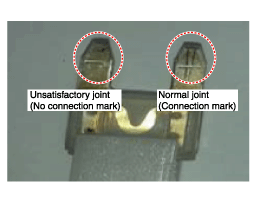
Inspect whether connector is connected.
|
| 5. |
Inspect ground condition on reversing light circuit.
|
| 6. |
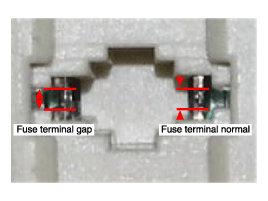
Inspect wiring connection on junction box power terminal and fuse lamp.
|
| 7. |
Inspect inhibitor switch signal.
|
| Removal |
| 1. |
Make sure vehicle does not roll before setting room side
shift lever and Automatic Transaxle(AT) side manual control lever to "N"
position. |
| 2. |
Remove the battery and the battery tray.
|
| 3. |
Remove the air cleaner assembly.
|
| 4. |
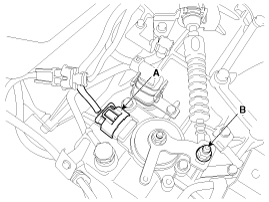
Remove the shift cable mounting nut (B).
|
| 5. |
Disconnect the inhibitor switch connector (A).
|
| 6. |
Remove the manual control lever (B) and the washer after removing a nut (A).
|
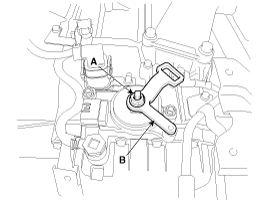

| 7. |
Remove the inhibitor assembly (A) after removing the bolts (2ea).
|
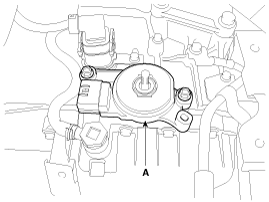
| Installation |
| 1. |
Installation is the reverse of removal. |
 Inhibitor Switch Troubleshooting
Fault Diagnosis
Fault Diagnosis for Symptom
Major Symptom Expected Cause Items to Check and Measures Shift lever not operating Gear not marked on cluster Shock occurs wh ...
 Shift Lever Components and Components Location
Components
1. Shift lever knob2. Shift lever assembly 3. Control cable assembly4. Manual control lever (T/M side)
...
See also:
Engine compartment
1. Engine oil dipstick
2. Engine oil filler cap
3. Engine coolant reservoir
4. Radiator cap
5. Brake fluid reservoir
6. Windshield washer fluid reservoir
7. Air cleaner
8. Positive batte ...
Knock Sensor (KS) Repair procedures
Removal
[Knock Sensor #1 (Bank 1)]
1.
Turn the ignition switch OFF and disconnect the battery negative (-) cable.
2.
Disconnect the knock sensor connector (A).
3.
Remove the intake man ...
Parking Brake Assembly Repair procedures
Removal
Parking Brake Shoe
1.
Raise the vehicle, and make sure it is securely supported.
2.
Remove the rear tire and wheel.
3.
Remove the rear brake caliper and Rear disc brake.
(Refer ...
Categories
Hyundai Azera Manuals

© 2011-2026 Copyright www.hgmanual.com